Common problems with builders rubbish clearance in Haringey
Posted on 30/06/2026
If you are planning a renovation, extension, bathroom refit, or even a simple knock-through, builders rubbish clearance in Haringey can become the part of the job that quietly causes the most stress. The rubble looks manageable at first. Then the bags fill up, the plasterboard piles grow, and suddenly access, timing, and cost start to matter more than you expected. That is usually where the common problems with builders rubbish clearance in Haringey begin.
In our experience, people often focus on the build itself and leave waste until the end. Fair enough - nobody gets excited about broken tiles, timber offcuts, and dusty rubble. But if the clearance plan is weak, the whole project can slow down. This guide breaks down the most common issues, why they happen, and what you can do to avoid them without turning your renovation into a saga.
For a broader look at how local services fit together, you may also find our services overview useful, especially if your project involves more than just builders' waste. And if you are trying to keep everything tidy between stages, efficient decluttering techniques for small spaces can help you keep the clutter from taking over.

Why common builders rubbish clearance problems matter in Haringey
Builders' waste is rarely just one type of rubbish. A small project can produce timber, plasterboard, bricks, packaging, dust, old fittings, broken tiles, and sometimes bulky items like doors or radiators. In Haringey, where a lot of homes and premises have tight access, narrow front paths, shared drives, or limited parking, that mix can be awkward very quickly.
The main reason this matters is simple: waste that is not managed properly creates knock-on problems. You may lose working space, create trip hazards, delay tradespeople, or end up paying more because waste has been left to accumulate. On a busy street, it can also create issues with neighbours and passers-by. Let's face it, no one wants bags of rubble sitting outside longer than necessary, especially on a wet morning when everything gets a bit grimy and heavy.
It also matters because builders' waste is not the same as ordinary household rubbish. Some materials need segregating, some are heavier than they look, and mixed loads can affect what happens next. If you are unsure how your project waste should be handled, the guidance on builders waste disposal in Haringey is a helpful place to start. It gives you a clearer sense of what belongs in this category and why proper handling saves time later.
Expert summary: Most builders rubbish problems are not caused by the waste itself. They come from poor timing, poor sorting, poor access planning, or assuming "we'll deal with it later." That last one is a classic.
How builders rubbish clearance works in practice
At a practical level, builders rubbish clearance works best when it is treated as part of the project plan rather than a final tidy-up. Waste is generated in stages, not all at once. A demolition phase creates heavy debris. Fit-out creates packaging, offcuts, and broken fixtures. Finishing works produce dust, protective coverings, and awkward small items that still need removal.
In Haringey, the process is often shaped by access. If you are on a terraced road, waste may need to be carried from the property to the vehicle by hand. If you are in a flat, you might need to navigate stairs, communal hallways, or lift restrictions. If you are near busier parts of the borough, parking and loading can also affect timing. That is why clearance often works best when the schedule is aligned with the build itself.
A sensible approach usually includes a short site assessment, a rough idea of volume, and a plan for what needs separating. Mixed builders waste can often be removed in one go, but the more clearly it is organised, the easier it is to move. If the work involves furniture or old household items as well as construction debris, you may need to combine it with furniture removal in Haringey or a broader waste removal arrangement rather than treating everything as one pile.
That distinction sounds small, but it matters. A lot.
Key benefits and practical advantages
When builders rubbish clearance is handled properly, the benefits show up throughout the project, not just at the end.
- Safer working conditions: clear floors and walkways reduce trips, slips, and accidental damage.
- Better trade efficiency: decorators, plumbers, and carpenters can work without moving waste out of the way.
- Less stress: fewer full bins, fewer overflowing bags, and fewer last-minute arrangements.
- Cleaner finish: a tidy site makes the final property clean-up much easier.
- Lower risk of disputes: when waste is removed on time, neighbours and landlords are less likely to complain.
- More predictable costs: dealing with clearance in a planned way often avoids emergency premiums and repeat visits.
There is also a quieter benefit that people notice once the dust settles: momentum. A clear site feels like progress. You can actually see the transformation. And that can be oddly motivating when you are halfway through a stressful renovation and the hallway looks like a small builders' yard.
If your project involves multiple room types, you may want to compare related services such as house clearance or loft clearance in Haringey to see whether a broader clearance solution would be more efficient than separate visits.
Who this is for and when it makes sense
Builders rubbish clearance is not just for large contractors. In Haringey, the need shows up in all sorts of everyday situations.
- Homeowners doing kitchen, bathroom, or loft works
- Landlords refreshing a rental between tenancies
- Property investors preparing a unit for resale or letting
- Small builders and tradespeople working on compact sites
- Office managers removing fit-out debris after refurbishment
- Event organisers clearing temporary build materials after a setup
It makes sense whenever the waste is too bulky, too heavy, or too awkward for normal household bins. It also makes sense when timing matters. If your builder is due back the next morning and the waste is still blocking the landing, you probably need a quicker solution than waiting for the next council collection window.
For local context, the perspective in Living in Haringey: a local's perspective offers a useful sense of how tightly many local properties are laid out. That everyday reality is often the reason clearance needs to be planned carefully here, more than people expect.
Step-by-step guidance
Here is a practical way to handle builders rubbish clearance without the usual headaches.
- Separate waste as it is created. Keep rubble, timber, metal, cardboard, and reusable items apart where possible.
- Estimate volume early. A small bathroom rip-out can produce more waste than it looks like. Builders always say this. Usually they are right.
- Check access before booking. Measure gates, stairways, and narrow corners. Note parking restrictions, shared entrances, and loading distance.
- Decide what must go first. Heavy debris often needs priority removal so the site stays safe and workable.
- Book clearance to match the build schedule. Mid-project removal is often smarter than leaving everything until the end.
- Clarify what is included. Make sure you know whether labour, loading, sorting, and disposal are all part of the arrangement.
- Keep the paperwork simple but complete. If you are using a professional service, ask how waste transfer and compliance are handled.
- Do a final sweep. After the waste is gone, check corners, cupboards, under stairs, and any outdoor storage space.
If your project has urgent timing, the article on urgent rubbish collection in N17 Tottenham is helpful for understanding how speed and planning usually fit together in real life.
Expert tips for better results
These are the small things that make a noticeable difference.
1. Use a staging area. Even a narrow patch of floor or a temporary corner in the garden can help you keep waste under control. The point is to stop the site from becoming one giant mixed pile.
2. Keep plasterboard separate if possible. It is awkward, bulky, and a nuisance when mixed with everything else. Separating it can make disposal simpler.
3. Protect access routes. Put down dust sheets, cardboard, or boards where needed. A scuffed stairwell is one of those tiny things that becomes a big issue later.
4. Think about sound and timing. Early-morning loading on a quiet street can be efficient, but it needs to be done considerately. A few minutes of care saves a lot of neighbour irritation.
5. Ask about recycling routes. Good clearance providers should aim to divert recyclable materials where appropriate. That links closely with local sustainability priorities, and you can read more in recycling and sustainability.
6. Keep one eye on the finish. The best clearance plan is not just about removing waste. It is about making the site ready for the next trade, the next inspection, or the next stage of the job.
And yes, sometimes the most expert move is simply not to wait until the pile has taken over the room.
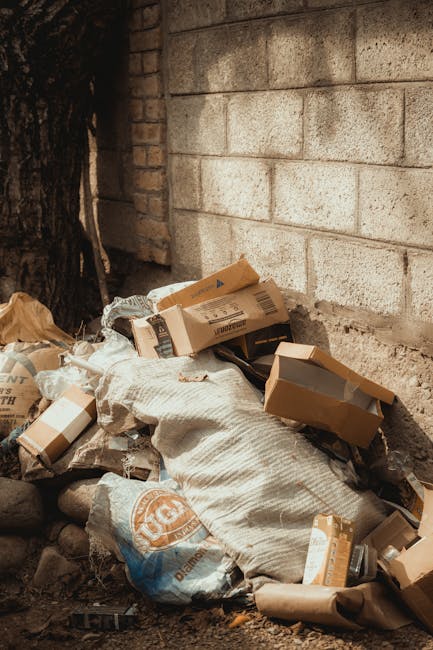
Common mistakes to avoid
This is where many projects go sideways. The mistakes are usually predictable, which is good news, because predictable problems are easier to avoid.
- Leaving waste to the end: this often causes bottlenecks and makes the final clean-up slower.
- Underestimating heavy materials: rubble and broken masonry are much heavier than they look in a pile.
- Mixing everything together: mixed waste is harder to sort, harder to move, and sometimes less efficient to clear.
- Ignoring access constraints: a van cannot park where it is not allowed to park. Frustrating, but true.
- Forgetting about neighbours or shared areas: hallways, front steps, and driveways should remain usable.
- Not checking what the quote covers: hidden add-ons often appear when access or waste type was not discussed properly.
- Assuming all waste is the same: builders rubbish, domestic junk, garden cuttings, and appliances may all need different handling.
If you want a practical warning about cost surprises, avoiding hidden rubbish removal charges in Haringey is worth a look. It matches the same kind of planning mindset that helps with builders' waste too.
Tools, resources and recommendations
You do not need a warehouse full of equipment to manage builders rubbish well. A few simple things go a long way.
| Tool or resource | What it helps with | Why it matters |
|---|---|---|
| Heavy-duty rubble sacks | Collecting broken materials and sharp offcuts | Normal bags split far too easily |
| Gloves and sturdy footwear | Handling rough waste safely | Builders waste can be sharp, dusty, and awkward |
| Labels or marker pens | Sorting waste streams | Makes loading and disposal faster |
| Dust sheets | Protecting floors and routes | Reduces clean-up after removal |
| Clear access plan | Guiding loading and parking | Useful on tight Haringey streets |
For service planning, a few pages can help you think through the wider job. If you are comparing removal options, the pricing and quotes page is useful for understanding how a proper quote is normally put together. If your project involves a mix of commercial and domestic waste, commercial waste removal in Haringey may also be relevant depending on the site setup.
One more practical recommendation: if old appliances or white goods are being removed alongside building debris, keep them separate where possible. A fridge is not the same as a skip full of rubble, no matter how hard it is staring at you from the corner. For that kind of item, white goods and appliance disposal in Haringey can be the more suitable route.
Law, compliance and best practice
Builders rubbish clearance is not just a practical job; it also has compliance implications. In the UK, waste must be handled responsibly, and anyone arranging clearance should make sensible checks before hiring a provider. The details can vary depending on the waste type, but the principle is straightforward: know where the waste is going, and make sure it is being handled by a legitimate operator.
For best practice, ask whether the business is properly insured, whether it follows waste carrier requirements, and how it handles disposal documentation. That is not being awkward. That is just sensible due diligence. A few minutes of checking can save a lot of trouble later.
Health and safety also matter. Builders' waste often includes sharp edges, dust, splinters, and unstable piles. Manual handling is another concern, especially in tight stairwells or cramped front gardens. A professional team should know how to move loads safely and protect both people and property.
If you want to understand the wider trust signals around a provider, the site's waste carrier licence and compliance, insurance and safety, about us, payment and security, privacy policy, and terms and conditions pages are the kind of pages that help readers check those basics before making a decision.
Plainly put: if a clearance arrangement sounds vague, push for clarity. Vague and waste do not mix well.
Options, methods, or comparison table
Different projects call for different approaches. Here is a simple comparison of the most common options.
| Method | Best for | Pros | Watch-outs |
|---|---|---|---|
| DIY bagging and trips to the tip | Very small jobs | Low upfront cost, full control | Time-consuming, heavy lifting, vehicle access, tip rules |
| Skip hire | Longer jobs with steady waste output | Easy to fill gradually, good for major refurbishments | Needs space, permits may be needed, waste can sit out for days |
| Man-and-van style clearance | Mixed builders waste, tight access, quicker removals | Fast, flexible, labour included | Needs clear briefing to avoid misunderstandings |
For many Haringey properties, the third option is the most practical. Why? Because many homes simply do not have generous outdoor space or easy roadside loading. If you are in a flat conversion, a terraced street, or a property with awkward stairs, the convenience of a collection team doing the lifting can outweigh the appeal of handling it yourself.
There is no one-size-fits-all answer here. The right method depends on volume, access, timing, and how much disruption you can tolerate. Truth be told, that is the real decision point.
Case study or real-world example
Here is a realistic scenario from the kind of job that comes up all the time.
A homeowner in Haringey is renovating a compact kitchen and replacing old flooring at the same time. The builder starts well, but by day three the hallway has become a staging area for broken tiles, packaging, timber strips, and a bag of old fittings. The skip quote looked fine on paper, but there is no easy place to put a skip outside, and the street is already tight for parking.
The problem is not dramatic, just annoying. Bags are in the way. The tradesperson has to move things around before starting work. Dust keeps drifting into the adjoining room. The homeowner starts worrying about the finish and whether the project will drag on.
The fix is straightforward: split out the heavy rubble, remove it early, then schedule a second clearance for the packaging and lighter waste near the end of the job. The hallway clears, the builder can move freely, and the property starts to feel liveable again. Nothing magical. Just a sensible sequence.
If that kind of project is close to your own situation, you might also find Manor House N4 loft rubbish clearance without delays helpful for thinking about speed and access in a tighter local setting.
Practical checklist
Use this before the waste starts piling up too far.
- Have I identified the main waste types already?
- Do I know which items are heavy, bulky, or sharp?
- Is access clear from the property to the loading point?
- Have I thought about parking or loading restrictions?
- Do I need more than one clearance visit?
- Are reusable or recyclable items being kept separate?
- Have I checked whether old appliances or furniture need separate handling?
- Do I know what the quote includes?
- Have I planned around builder availability?
- Will the clearance keep the site safe and workable?
One small tip that helps more than people expect: take a quick phone photo of the waste area before booking. It is a simple reference point and often makes the discussion much easier.
Conclusion
The common problems with builders rubbish clearance in Haringey usually come down to timing, access, sorting, and assumptions. Get those four things right and the whole process becomes much calmer. Get them wrong and even a small renovation can feel cluttered, slow, and more expensive than it needed to be.
The good news is that most of these issues are avoidable. Plan early, separate waste properly, think about the layout of the property, and choose a method that fits the job rather than forcing the job to fit the method. That is the difference between a smooth project and a messy one.
If you are weighing up your next step, take a moment to review the wider service details, compare the options, and ask the practical questions before anything piles up. It is a boring bit of planning, yes. But it saves a lot of faffing later.
Get a free quote today and see how much you can save.
And if your project is already underway, do not worry - a clear plan can still steady the whole thing. One good decision at a time.